


| $ R(x) $ Shape of thin needle | |
| $ \psi $ Stream function | |
| $ {C}_{{\rm{f}}} $ Skin friction coefficient | |
| $ f(\eta ) $ Velocity profile | |
| $ k $ Thermal conductivity | |
| $ R{e}_{{\rm{x}}} $ Local Reynolds number | |
| $ {D}_{{\rm{B}}} $ Brownian diffusion coefficient | |
| $ {N}_{{\rm{r}}} $ Radiative parameter | |
| $ \nu $ Kinematic viscosity | |
| $ Pr $ Prandtl number | |
| $ (x,r) $ Directions | |
| $ \left(u,v\right) $ Components of Velocity | |
| $ {D}_{{\rm{T}}} $ Thermophoretic diffusion co-efficient | |
| $ \alpha $ Thermal diffusivity | |
| $ \rho $ Density of base fluid | |
| $ \mu $ Dynamic viscosity | |
| $ (\rho {C}_{{\rm{p}}}) $ Heat capacitance | |
| $ T $ Fluid temperature | |
| $ C $ Fluid concentration | |
| $ Du $ Dufour number | |
| $ {T}_{{\rm{m}}} $ Fluid mean temperature | |
| $ {D}_{{\rm{m}}} $ Mass diffusivity coefficient | |
| $ {C}_{{\rm{s}}} $ Nanoparticle concentration susceptibility | |
| $ k* $ mean absorption coefficient | |
| $ {N}_{{\rm{b}}} $ Brownian motion parameter | |
| $ {N}_{{\rm{t}}} $ thermophoresis parameter | |
| $ {\theta }_{{\rm{r}}} $ heating parameter | |
| $ Sc $ Schmidt number | |
| $ s $ Stefan blowing parameter | |
| $ \lambda $ Velocity ratio parameter | |
| $ \beta * $ Casson parameter | |
| $ Nu $ Nusselt number | |
| $ S{h}_{{\rm{x}}} $ Sherwood number | |
| $ \sigma * $ Stefan-Boltzman constant | |
| $ {T}_{{\rm{w}}} $ Surface temperature | |
| $ {T}_{\infty } $ Ambient temperature | |
| $ {C}_{{\rm{w}}} $ Surface concentration | |
| $ {C}_{\infty } $ Ambient concentration | |
| $ U={U}_{{\rm{w}}}+{U}_{\infty } $ Composite velocity | |
| $ \theta (\eta ) $ Temperature profile | |
| $ \tau $ Ratio of effective heat capacity | |
| $ c $ Needle thickness size | |
| $ Sr $ Soret number | |
| $ {K}_{{\rm{T}}} $ Thermal diffusion ratio | |
| $ {C}_{{\rm{p}}} $ Particular heat at uniform pressure | |
| $ \chi (\eta ) $ Concentration profile |
1. Introduction
2. Governing equations and physical description
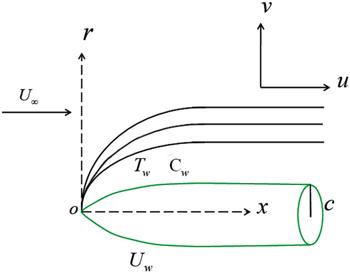
Figure 1. Flow geometry of the considered physical model. |
3. Numerical method
4. Results and discussions
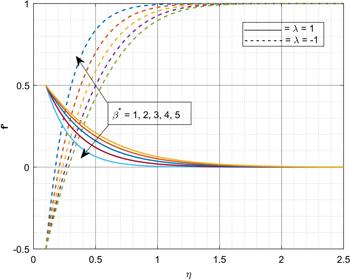
Figure 2. Domination of $\beta * $ on $f^{\prime} .$ |
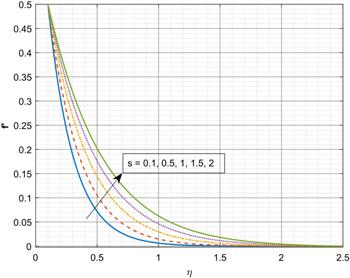
Figure 3. Domination of $s$ on $f^{\prime} .$ |
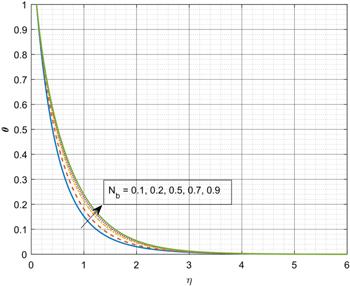
Figure 4. Domination of ${N}_{{\rm{b}}}$ on $\theta .$ |

Figure 5. Domination of ${N}_{{\rm{t}}}$ on $\theta .$ |
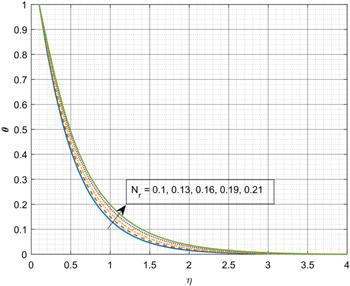
Figure 6. Domination of ${N}_{{\rm{r}}}$ on $\theta .$ |

Figure 7. Domination of ${\theta }_{{\rm{r}}}$ on $\theta .$ |
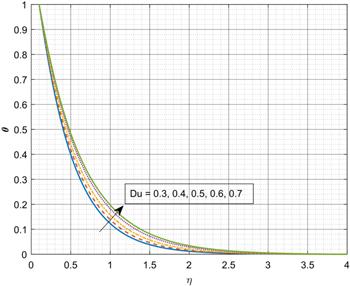
Figure 8. Domination of $Du$ on $\theta .$ |
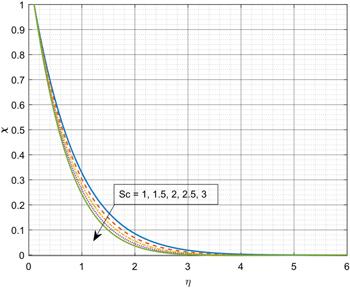
Figure 9. Domination of $Sc$ on $\chi .$ |

Figure 10. Domination of $Sr$ on $\chi .$ |
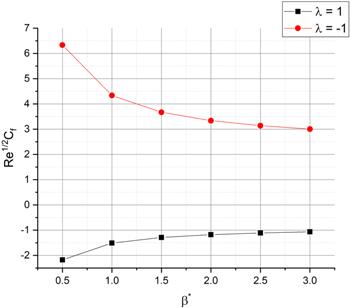
Figure 11. Domination of $\lambda $ on $R{{e}_{{\rm{x}}}}^{1/2}{C}_{{\rm{f}}}.$ |
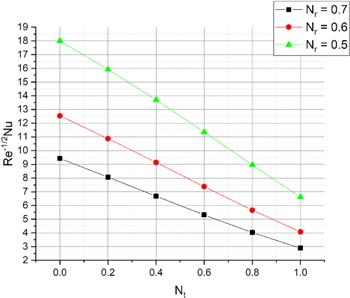
Figure 12. Domination of ${N}_{{\rm{r}}}$ on $R{{e}_{{\rm{x}}}}^{1/2}Nu.$ |
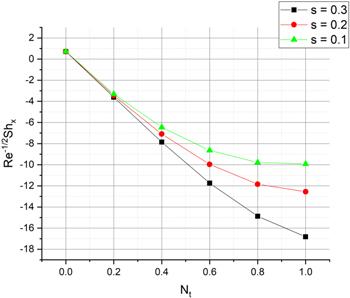


Figure 13. Domination of $s$ on $R{{e}_{{\rm{x}}}}^{1/2}S{h}_{{\rm{x}}}.$ |
5. Conclusions
| • | The growing values of ${N}_{{\rm{b}}}$ progresses the thermal gradient due to an increase in the thermal conductivity. |
| • | The escalating values of ${N}_{{\rm{r}}}$ and ${\theta }_{{\rm{r}}}$ improves the inner temperature of liquid particles resulting in an improvement in heat transfer. |
| • | An upsurge in the $Sc$ lessens the molecular diffusivity and it results in declination of mass transfer. |
| • | The enhancing values of ${N}_{{\rm{t}}}$ improve the heat transfer. |
| • | The thermal diffusion increases as $Du$ increases which augments the temperature. |
| • | Higher values of $Sr$ reasons for low friction which in turn augments the mass transfer. |